Why public realm matters in Ireland now more than ever
As Tallaght Village reaches a major milestone, Aisling Murphy shares why thoughtful placemaking starts with listening to communities.

Off the back of Tallaght Village Enhancement Scheme securing Part 8 approval from South Dublin County Council, Aisling Murphy, Director of Ireland at Civic, reflects on the renewed national focus on pedestrian-first streets, active travel and climate resilience and why public realm projects have an increasingly important role to play in shaping Ireland's towns and villages.
There’s a growing conversation happening across Ireland about who our streets are really for.
From renewed debate around pedestrianisation in town centres to the continued rollout of active travel investment and the next phases of BusConnects – the National Transport Authority’s programme to deliver a more efficient, reliable and better-connected bus network – we’re being asked collectively to reconsider how we move through our villages, towns and cities.
As an engineer who has spent over a decade working in transport and urban infrastructure I see that shift as an important opportunity.
That broader national repositioning makes the Tallaght Village Enhancement Scheme particularly timely. Tallaght is the County Town of South Dublin County Council, yet for many years, its historic village core has struggled to keep pace with the scale and speed of development around it.
As Tallaght expanded, its centre of gravity shifted, retail and activity clustered elsewhere, and the village – with its remarkable assets including the priory and pocket park – became quieter, more disconnected, and shaped largely by traffic movement rather than community life.
Now, that is beginning to change.
The scheme we are progressing alongside South Dublin County Council and Bernard Seymour Landscape Architects aims to rebalance the village both physically and socially. At the heart of the project is a clear intention to reshape the streets so that walking, cycling and spending time there feel natural – rather than secondary to through-traffic.
Public realm is sometimes misunderstood as cosmetic – new paving, lighting, benches. In reality, it is structural. It determines whether a parent feels comfortable letting their child cycle ahead of them, whether an older resident can cross the street without anxiety or whether a local café can spill out into the sunshine.
Community voices in Tallaght have been clear. Across the consultation so far, there’s been a strong appetite to see the village become more pedestrian-focused, with many people asking what it would take to truly prioritise people over traffic.
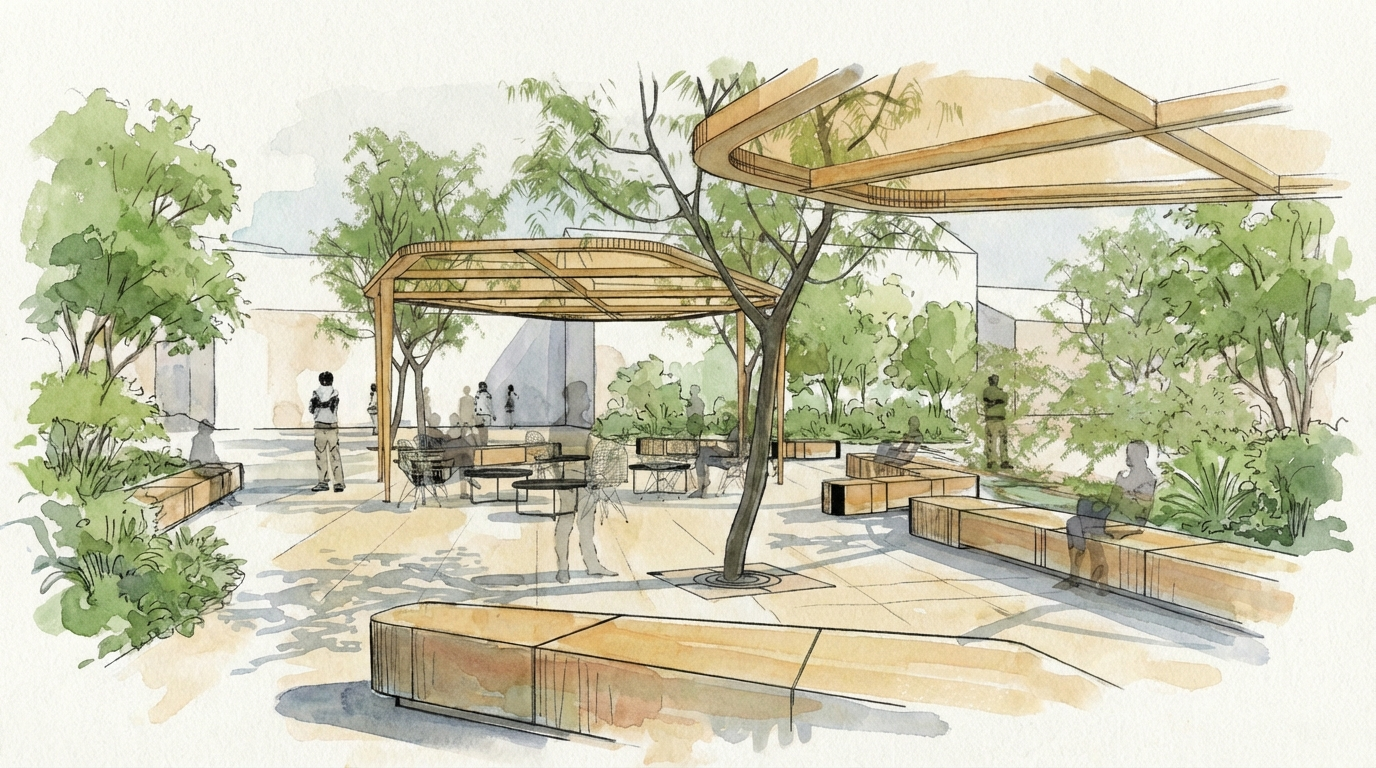
Of course, it’s not quite as simple as removing cars. There are real considerations, particularly with planned public transport improvements like BusConnects, which will bring better bus connections through the area. The challenge, and the opportunity, is finding the right balance so that the village works well for both movement and everyday life.
That’s where collaboration really comes into its own. Our role is to work closely with South Dublin County Council, the wider project team and, importantly, the community, to explore what’s possible and shape a solution that feels right for Tallaght.
This week marks an important milestone for the project, with South Dublin County Council approving the Part 8 plans following extensive consultation and discussion. Like many projects that seek to reshape how streets function, the proposals generated a wide range of views from residents, businesses and stakeholders. For me, that is not a sign of failure but of engagement.
Public realm matters because people care deeply about the places they live, work and spend time in. The conversations can be challenging, but they are also an essential part of creating places that work better for communities over the long term.
What stands out to me is how engaged people have been. There’s a real sense that the community wants to be part of shaping the future of the village – good projects are built on that kind of input.
It’s not just about how the village looks, but how it works sustainably day to day too, whether that’s managing rainwater better, bringing in more planting, and creating places that people feel connected to. Places that are easy to move through, but also somewhere you might choose to stop and spend time.
Change like this takes time, and it should. The recent Part 8 approval is an important step forward, but it is only one milestone in a much longer journey. Here there is a real opportunity to reshape Tallaght Village into something that better reflects the community around it and demonstrates the value that thoughtful public realm investment can bring to towns and villages across Ireland.
